A utility interconnection letter is the written answer to your request to connect a generator to the grid, and there is almost never just one of them. Expect four. The utility says your application is complete, then it approves the design so you can build, then it accepts the inspection paperwork and any witness test, and then it issues permission to operate. Only the last one lets you turn the system on. In Pennsylvania the first three have deadlines written into 52 Pa. Code Chapter 75.
Letter one says your application is complete, and that is when the clock starts
Nothing in the rulebook runs off the day you signed a contract. It runs off the day the utility marks the application complete.
In Pennsylvania, the review level depends on the size and the equipment. 52 Pa. Code 75.34 sends a system to Level 1 review when the nameplate capacity is 10 kW or less and the interconnection equipment is certified, and to Level 2 review when the system is inverter based, certified, 2 MW or less, and connecting to a radial distribution circuit. Most houses in Pike County land in one of those two buckets. A modest roof array can be Level 1. Add a battery and a larger inverter and you are usually looking at Level 2.
Under 52 Pa. Code 75.37, a Level 1 request gets an answer on completeness within 10 business days, and that answer has to say what is missing if anything is. That is the first letter. It is short, it is boring, and it is the one people delete. Keep it. The date on it is the date every later deadline hangs off.
If PPL bills the house, the utility publishes its own expectation on top of the state rule. PPL recommends applying at least six months before interconnection service is needed, and says that for installations under 25 kW inverter nameplate you should hear back within three to four weeks of submitting a completed and signed application. Those two numbers are not in conflict. The three to four weeks is the review. The six months is PPL telling you that transformer work, line work and scheduling are not instant.
Letter two is approval to install, and it is the one people misread
This is the letter that causes the most confused phone calls. It arrives, it looks official, it has the words "approved" in it, and the homeowner reasonably concludes the project is done being reviewed. It is not permission to operate. It means the utility has looked at the design and will let the array go on the roof.
Under Level 1 in 52 Pa. Code 75.37, the utility has 15 business days after that first 10 day completeness window to verify the system can be interconnected safely and reliably using the Level 1 screens. Under Level 2 in 52 Pa. Code 75.38, the utility has 20 business days after telling you the request is complete to run the Level 2 screening criteria and hand back its evaluation, and if the project passes it must provide a standard small generator interconnection agreement within 5 business days of that determination.
Two things in that paragraph matter to you specifically.
First, business days. Twenty business days is a month of calendar. Add a holiday week and it stretches. If you are counting on your fingers from the day you signed, you will think you are late when you are early.
Second, the agreement is yours to sign and there is a clock on it. 52 Pa. Code 75.38 gives the interconnection customer 30 business days to sign and return the standard agreement, and the request is deemed withdrawn if you do not, unless you ask for an extension. We have never seen a homeowner lose a project this way, because the paperwork usually runs through us. It is still your signature and your deadline.
A Level 2 project can also come back having failed a screen without being dead. The rule lets the utility offer additional review to see whether minor modifications to the distribution system would make the interconnection work, along with a nonbinding, good faith estimate of what that review and those modifications would cost, and the utility only proceeds once you consent to pay. That is the point in the process where a project genuinely can stall, and it is worth knowing the difference between that letter and an ordinary quiet week.
What we install, and why the equipment decides how the paperwork reads
The application is a description of hardware. Change the hardware and you change the review.
PPL requires an inverter certified to UL 1741 Supplement B and says only approved inverters may be used, which is why the inverter is chosen from an approved list rather than from whatever is on the shelf. We install and service EG4, Generac, Sol-Ark, SMA, SolarEdge, Tesla, APsmart, SunPower and Sungrow. There is more detail on that list in our post on the equipment we install and service.
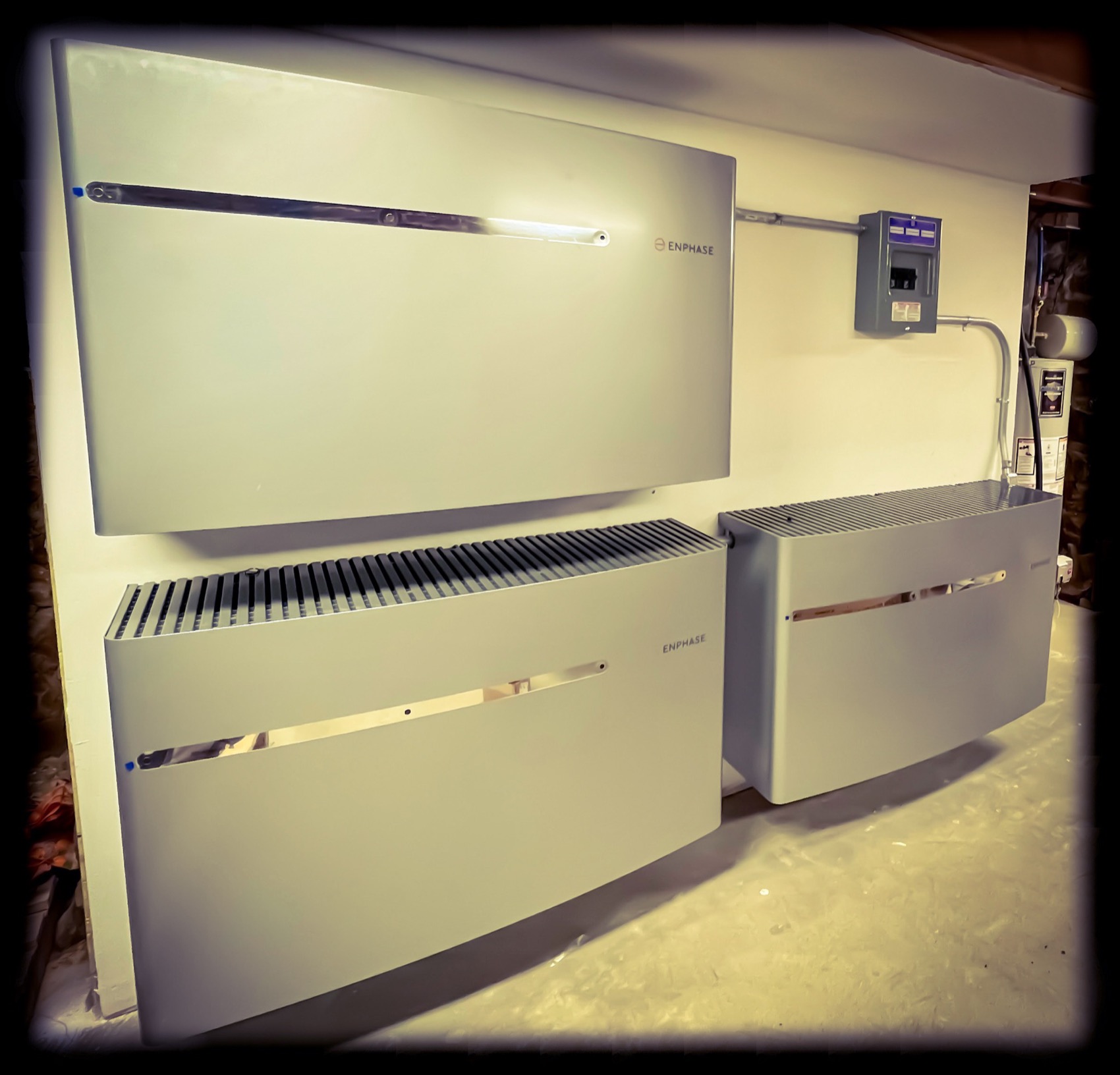
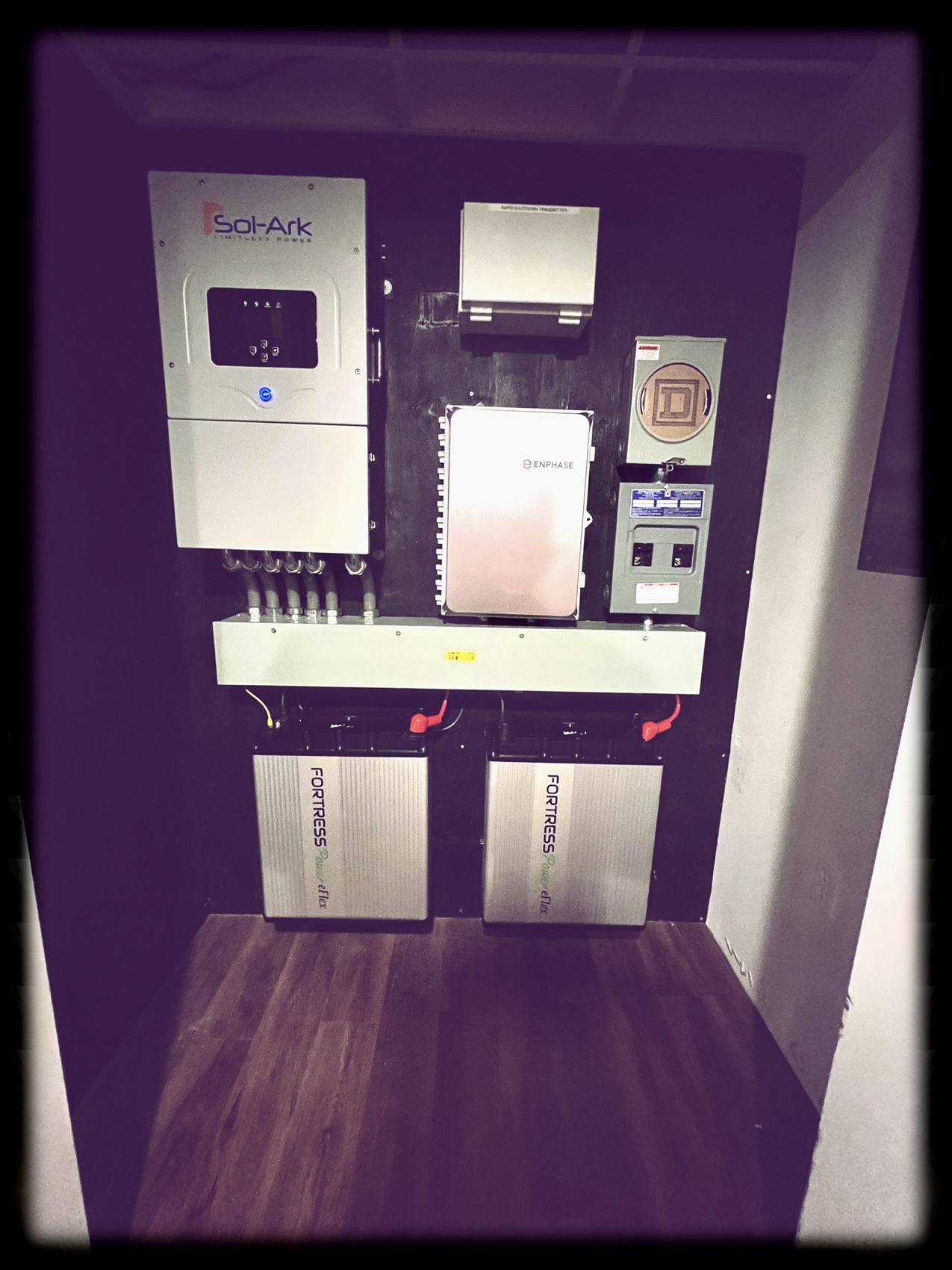
Storage is its own line in the review. PPL asks that any battery installation be submitted for approval, so a Sol-Ark or EG4 system with backup loads is not a solar application with a battery bolted on afterward. It is one drawing set with the battery, the backup panel and the transfer arrangement shown. If a battery is what you are actually after, start with our guide to battery backup in the Poconos.
The other equipment detail that shows up in the field: PPL's requirements call for the AC disconnect switch to sit directly next to and in sight of the PPL meter. On an older house with the meter on a gable end and no clean path back to the main panel, that one line changes where the conduit runs and sometimes how long the install day takes. It is also the sort of thing an inspector notices immediately. Our service and install work lives or dies on catching that in the design, not on the roof.
Send us the service address, tell us which utility bills you, and if an application is already in, tell us the date the utility marked it complete. We will tell you which of the four letters you are waiting on. Start with the address or call the office at (570) 500-2327.
Letter three comes after the inspection and the certificate of completion
After the array is up, two separate bodies have to be satisfied and they are not the same body.
The electrical inspection is municipal. Pennsylvania's rule makes that explicit: under 52 Pa. Code 75.37, the utility approves the interconnection request subject to the system having been approved by local or municipal electric code officials with jurisdiction, a certificate of completion having been returned to the utility, the witness test being completed or waived, and the customer having signed the standard interconnection agreement. Four conditions. Miss any one and the last letter does not come.
Who your electrical inspector is depends on your municipality, and practice differs across Dingman Township, Milford Borough, Westfall, Shohola and everywhere else in the footprint. We do not publish permit fees or turnaround times for a named township, because those change and a wrong number in print is a phone call somebody has to take. Ask us for your address and we will tell you who we file with there.
The witness test is the utility's own look at the finished job. The rule says that upon notice within 10 business days after receiving the certificate of completion, the utility may conduct a witness test at a mutually convenient time, and if it does not conduct the test in that window the test is deemed waived. Plenty of small residential jobs never get a physical visit. That is normal and it is not the utility ignoring you.
The last letter is permission to operate
Permission to operate is the utility saying the system may run in parallel with its grid. Until it lands, the array stays off. That is not a formality invented by installers. It is the condition the whole interconnection agreement is built on.
What comes with it varies by account, and whether your meter gets exchanged is a question for the utility that serves your address rather than something we will predict for you. PPL's tariff for net metering treats a residential customer-generator as a non-utility owner or operator of a net metered system with nameplate capacity not greater than 50 kW at a residential service, and the rider is what your billing shifts to. If you have been watching rates, our post on the 2026 electric bill increase around Milford is the companion to this one.
One more PPL note worth reading before you assume a delay is paperwork. PPL says that if changes to its own equipment are needed, all customer responsibilities including payment and a signed right of way agreement where required must be met before the job can be scheduled. A transformer or a line change is field work with a crew and a calendar, and it does not move at the speed of an email.
Same shape in three states, different clocks
The Tri-State corner means a Milford office files under three different rulebooks in a normal month.
| Step | Pennsylvania | New York | New Jersey |
|---|---|---|---|
| Rule that sets the clock | 52 Pa. Code Ch. 75 | NYS Standardized Interconnection Requirements | N.J.A.C. 14:8-5.4 |
| First response on completeness | 10 business days (75.37) | 10 business days (SIR) | 3 business days (14:8-5.4) |
| Design review | 15 business days on Level 1 (75.37), 20 on Level 2 (75.38) | Same 10 day window can include the interconnection approval for expedited-eligible systems (SIR) | Level 1 screens for certified inverter systems (14:8-5.4) |
| What you sign | Standard small generator interconnection agreement, 30 business days to return (75.38) | Utility application and agreement for the size class (SIR) | Interconnection Application and Agreement, Part 1 terms, Part 2 certificate of completion (14:8-5.4) |
| Last gate before switch-on | Local electrical approval, certificate of completion, witness test or waiver (75.37) | Final acceptance, Step 6 of the SIR process (SIR) | Certificate of completion returned to the utility (14:8-5.4) |
Two things worth knowing about the New York column. The current Standardized Interconnection Requirements took effect August 1, 2025, and the utility has 10 business days from the original application to decide whether it is complete, whether the project is eligible for the expedited process, and whether it is approved for interconnection if it is eligible. The other is a deadline that belongs to you rather than the utility: if final acceptance is not completed within 12 months because of applicant inactivity, the utility may notify you that the project will be pulled from its interconnection inventory unless you respond within 30 business days with a status update. Projects that sit through a winter can get swept.
New Jersey filings use the state's net metering and interconnection materials, and the level 1 rule gives the utility three business days to acknowledge an application and say whether it is complete. Names you will see on the bill across the footprint include PPL Electric Utilities, Met-Ed, Orange and Rockland, Central Hudson, NYSEG, JCP&L, PSE&G and Sussex Rural Electric Cooperative. Which one serves a given house is decided by the address, not the town line, and we do not assume a cooperative follows the investor-owned utility process. We ask them.
Who this sequence does not apply to
Not every project in this area involves an interconnection letter at all.
- True off-grid builds. A hunting camp or a cabin with no utility service has nothing to interconnect to. No application, no witness test, no permission to operate, and also no net metering.
- Standby generator work. If what you are adding is a Generac and a transfer switch rather than a net metered generator, that is a different filing and a different conversation. Ask us which one your job actually is before you go looking for these letters.
- Houses where the real blocker is the panel. If the main service panel cannot host the interconnection, no letter fixes that. Read how the main service panel drives the design first.
- Anyone who needs the array running by a fixed date. Interconnection has statutory windows, not promises. We will not tell you a date the utility controls.
How to tell whether you are stuck or just waiting
Ask your installer four questions. They are the same four we would want answered if we were the homeowner.
- What review level is the application in, and on what date did the utility mark it complete.
- Has approval to install been issued, and is the interconnection agreement signed and returned.
- Has the municipal electrical inspection been passed, and has the certificate of completion gone back to the utility.
- Is the utility waiting on us, or on its own crew for equipment work.
If the answer to any of those is "I will check," that is fine. If nobody can answer them at all, that is the signal. In our experience the quiet weeks are almost always caused by something sitting on the contractor's desk, not by a utility conspiracy, and the fix is a phone call rather than a complaint.
If you want the wider version of this timeline including township permitting, we wrote it up in permits and interconnection across PA, NY and NJ. Finished jobs are on the projects page, and if you want a person to look at your specific paperwork, send us the address and the utility name and we will read the letters with you.
What we would tell a homeowner considering this
- There is not one interconnection letter. There are usually four, and only the last one lets you switch the array on.
- Approval to install is the letter most homeowners mistake for permission to operate. It means build it, not run it.
- Pennsylvania deadlines are written in business days in 52 Pa. Code Chapter 75, and the clock does not start until the utility calls your application complete.
- Most quiet stretches are caused by something on our side of the paperwork, not the utility, so ask what the utility is waiting for before you assume you are in a queue.