
Battery backup earns its place in the Poconos when outages are frequent, long, and cold. It is rarely about the electricity itself, it is about the well pump, the boiler controls, and the septic pump all stopping at once in February. A battery sized around those specific loads keeps a house livable through a multi-day winter outage with no fuel delivery and no extension cords. If your power goes out twice a year for two hours, a battery is a comfort purchase, and we would rather say that than sell you one.
What a home battery actually does when the grid goes down
A grid-tied solar array without storage shuts off the moment the utility drops. That surprises people every single winter. It is not a defect, it is anti-islanding protection, required so your system cannot backfeed a line that a lineman is working on.
Storage changes the picture by adding two things: a battery to hold energy, and a device that physically disconnects your house from the utility so the system can safely energize your own wiring. Depending on the equipment, that device is built into a hybrid inverter or lives in a separate system controller next to it. Once the house is islanded, the array can come back up and run your loads and recharge the battery while the grid is still down.
That is the whole trick. Everything else, how many kilowatt-hours, which brand, where the box goes, is engineering downstream of that one idea.
Which loads actually matter in a Poconos winter
Most homes up here are not trying to run normally during an outage. They are trying to stay habitable. In our experience the list that matters is short and it is not the list people expect:
- The well pump. A deep-well submersible is the single hardest load in most rural homes on this side of the Delaware. No pump means no water, no toilets, and no boiler make-up water.
- Heating controls and circulators. An oil or propane boiler burns fuel you already have in the tank, but it will not fire without power for the controls, the circulator pumps, and the zone valves.
- The septic pump, if the system has a pump chamber. Plenty of Pike and Wayne County properties do.
- Refrigeration. One refrigerator, sometimes a chest freezer with a season of venison in it.
- A handful of receptacles and lights, internet and cell booster, and any medical equipment in the house.
That set of loads is small. It is also spiky, the well pump surges hard on start, and the surge, not the running watts, is what decides whether a given inverter can carry it.
Whole-home versus a critical loads panel
There are two ways to wire this. A critical loads panel is a small subpanel holding only the circuits above; during an outage everything else stays dark. Whole-home backup keeps the entire service energized and relies on the equipment plus your own discipline to avoid overloading it.
Whole-home is what everyone asks for. A critical loads panel is what we recommend far more often, because it makes the outage predictable. You know exactly what runs. Nobody discovers at 2 a.m. that the electric range drained the battery.
How we size a battery for a house that loses power in winter
We do not start from your electric bill. The bill tells us about annual consumption, which is the right input for sizing an array and the wrong input for sizing backup.
For backup we start from three things:
- Your actual outage history. How often, how long, what time of year. Utility outage maps and your own memory are both useful here.
- The panel schedule. What is in the panel, what is 240-volt, what is a motor load, what surges.
- The recharge path. This is the one people skip.
That third item is where Poconos winters get honest. A January outage comes with short days, low sun angle, and frequently a layer of snow or ice on the array. A battery that can only recharge from the roof may not recover meaningfully between one evening and the next. That is the situation where either a bigger battery, a generator input on a hybrid inverter, or a plain admission that this house wants a generator is the right answer.
Battery, standby generator, or both?
There is no universal winner. There is a right answer per house.
| How they compare | Battery storage | Standby generator |
|---|---|---|
| Starts on its own | Automatic | Automatic |
| Noise while running | Silent | Audible outdoors |
| Fuel supply | None needed | Propane, natural gas or diesel |
| Very long outages | Limited by capacity and recharge | Runs while fuel lasts |
| Value when the grid is up | Daily, alongside solar | None |
| Moving parts and scheduled service | Very few | Engine service intervals |
| Large well pump surge | Depends on the inverter | Usually straightforward |
| Works with solar mid-outage | Yes | Not directly |
Read that table twice. A battery is quiet, maintenance-light, and useful 365 days a year. A generator does not care how long the outage lasts or whether the sun comes up. Homes with heavy motor loads, a large propane tank already on site, and a history of long winter outages are often better served by a generator, or by a hybrid inverter with a generator input, which is a combination we install regularly.
We install both sides of that decision, which is exactly why we are willing to talk you out of either one.
Not sure which side of that table your house is on? Send us your address and your outage story and we will tell you what we would do if it were ours.
Who battery backup is not right for
This is the section other companies leave out.
- Homes with short, rare outages. If the lights blink twice a year, storage is a comfort item. Buy it because you want it, not because someone framed it as protection.
- Houses heated with electric resistance heat. Baseboard and electric furnaces are enormous loads. Backing up meaningful heat with a battery in that scenario is not practical, and anyone telling you otherwise has not run the numbers.
- Properties about to change hands. If you are selling within a year or two, the disruption rarely makes sense.
- Unconditioned outbuildings as the equipment location. Lithium batteries have operating temperature ranges, and an unheated detached garage in Pike County in January sits outside them. Equipment location is part of the design, not an afterthought.
- Anyone shopping purely on price. We are not the cheap option and we do not pretend to be. Our work is priced like the work of a licensed contractor who will still be answering the phone in ten years.
The local wrinkle: your utility, your township, and where the box goes
Three things decide the shape of a storage project around here, and none of them are the battery.
Your utility. Across our service area that is usually PPL or Met-Ed in Pennsylvania, Orange & Rockland or NYSEG in New York, and JCP&L in New Jersey. Their interconnection paperwork, their required documentation for storage, and their queue times are all different from one another, and they change. We confirm the current requirements for your specific address and rate before we put a design in front of you rather than quoting from memory.
Your AHJ. Pike County townships, Milford Borough, and the New York and New Jersey municipalities we work in each have their own plan review habits, their own inspector, and their own adopted code cycle. Energy storage sits under NEC Article 706 and, where adopted, NFPA 855, and equipment is expected to be listed to UL 9540. What that means in practice is that clearances, the location of the disconnect, and whether a battery may live in finished interior space are decided by your inspector's adopted code, not by a brochure.
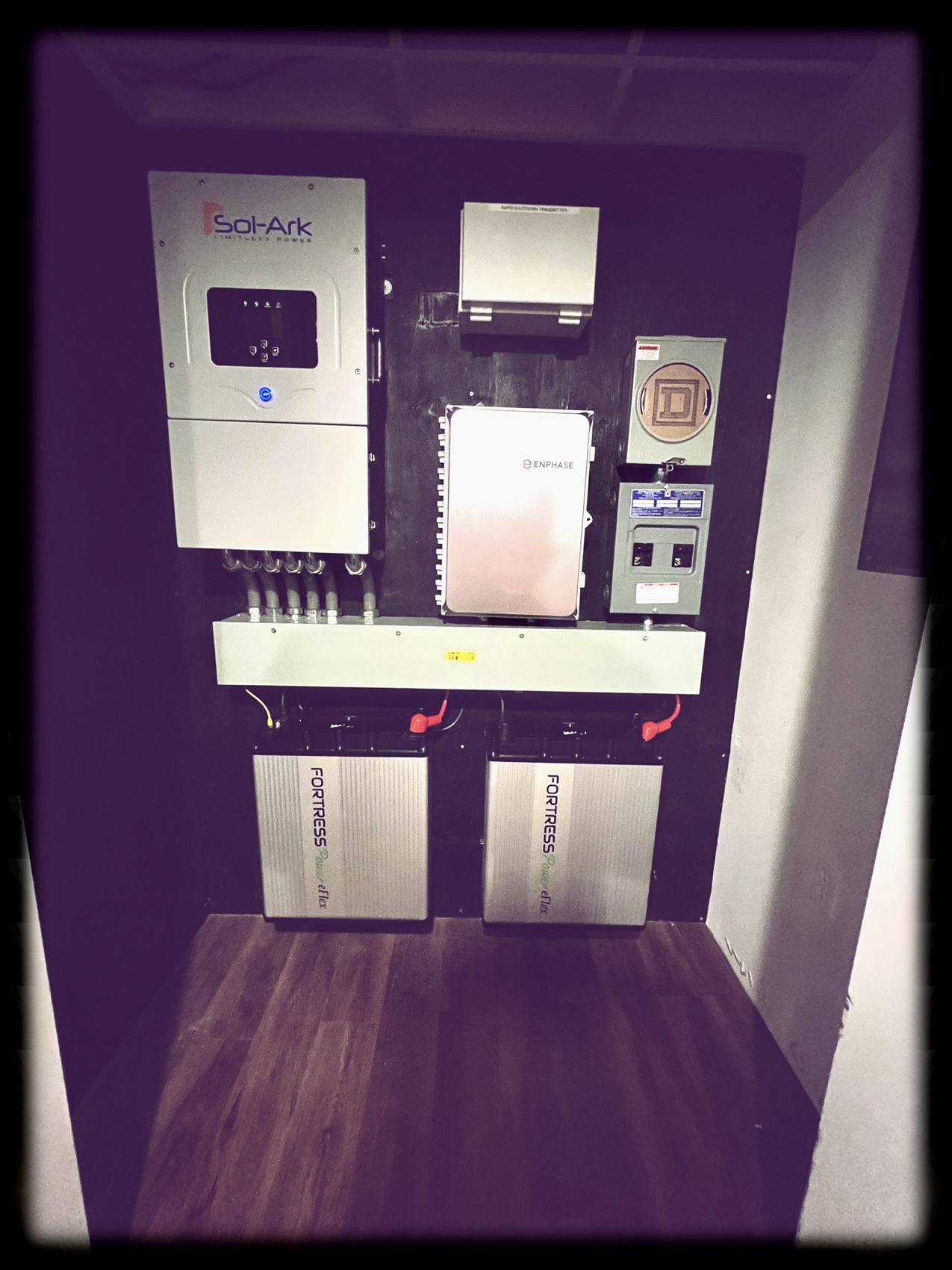
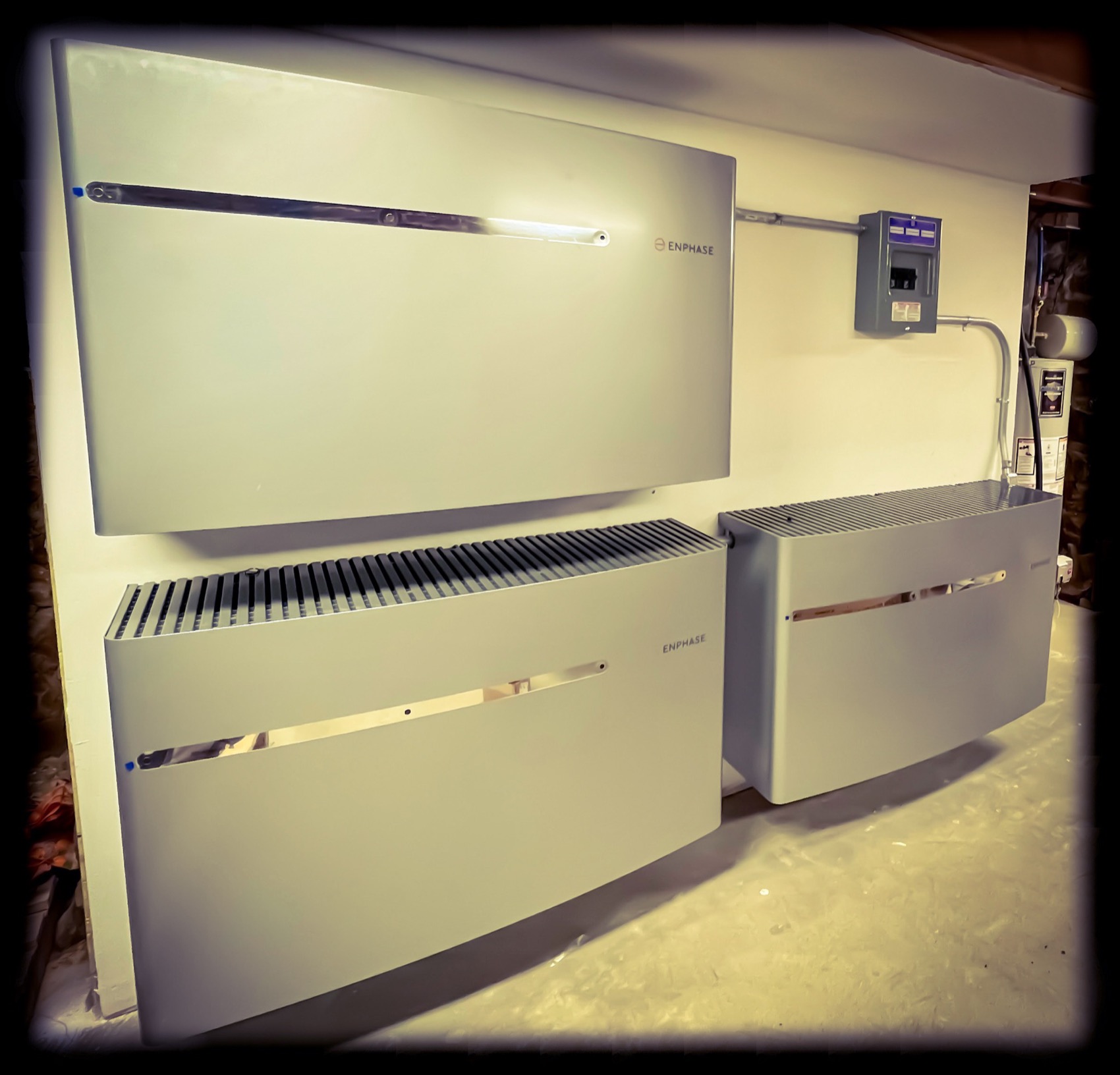
Where the equipment physically goes. Wall space near the service panel, an interior wall in conditioned space, garage clearances, and the run back to the meter all shape the drawing. This is why we walk the basement before we quote. It is also why the two photos in this post look so different from each other: one is finished space, one is not, and the layout followed the house.
What we install, and what we will not touch
We install and service equipment from EG4, Sol-Ark, SMA, SolarEdge, Sungrow, SunPower, APsmart, Generac, Enphase and Fortress Power. Which of those ends up on your wall depends on the loads, the recharge path, whether there is existing solar to integrate with, and whether you want a generator in the mix.
People ask this every week, so plainly: we install and service Tesla systems, including Powerwall. If there is already a Powerwall or a Tesla inverter on the house, we can work on it.
If you want the longer version of that list and the reasoning behind it, we wrote it up in the equipment we install and what we do not service. And if you are still deciding whether to own the system at all, ownership versus a lease or PPA is the other conversation worth having first, because storage on a leased system is a different animal.
What happens after you say yes
Design, permit, install, township inspection, then the utility. That sequence is where most of the calendar goes, and it is the part nobody explains up front, so we did, in what actually happens between signing and switch-on.
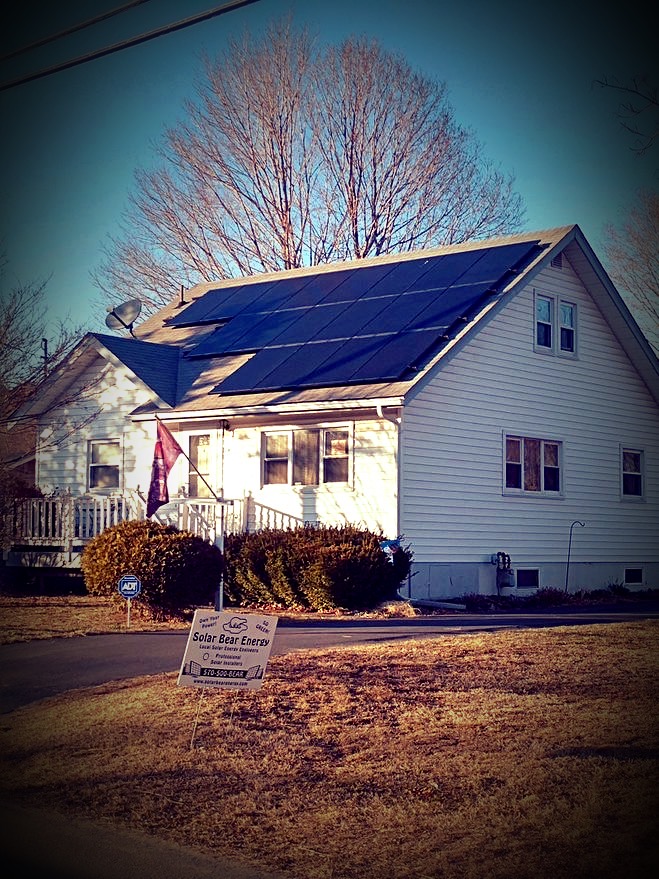
You can also just look at the work we have already put on roofs and basement walls around here. It is the most honest thing on this website.
What we would tell a homeowner considering this
- Start with your outage history, not with a battery size. Two four-hour outages a year and a twelve-hour outage every winter are completely different problems.
- Count the loads that make the house livable, well pump, heating controls, septic pump, refrigeration, before anyone quotes you a number of kilowatt-hours.
- In a Poconos winter, a battery that can only recharge from a snow-covered array will not carry you through a multi-day storm. Plan the recharge path, not just the storage.
- Ask where the equipment is going before you sign. Battery location is a code question, and it decides how the whole job looks.
- If your outages are short and infrequent, say so out loud. A battery is a comfort purchase in that case, and a good installer will tell you.