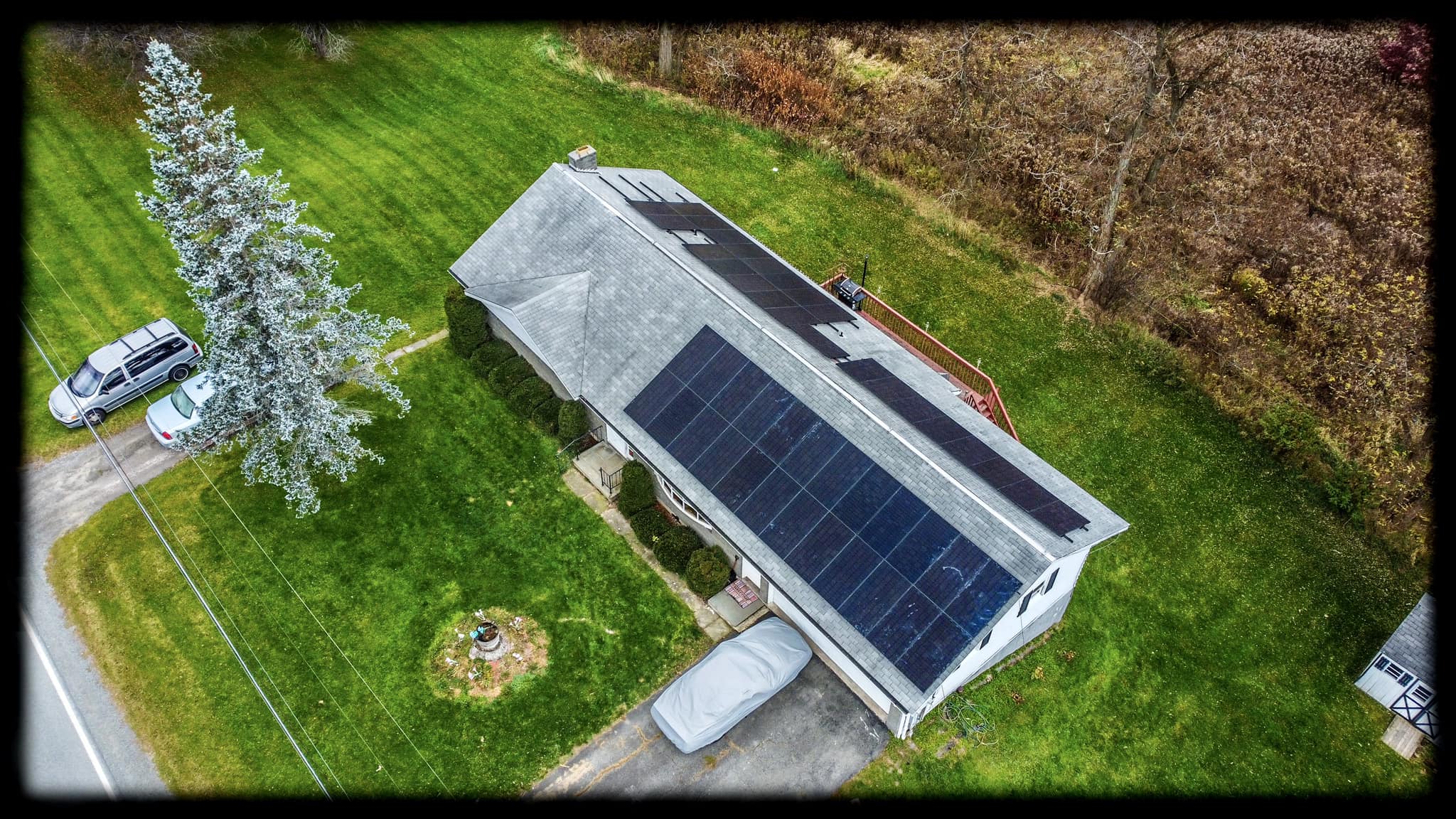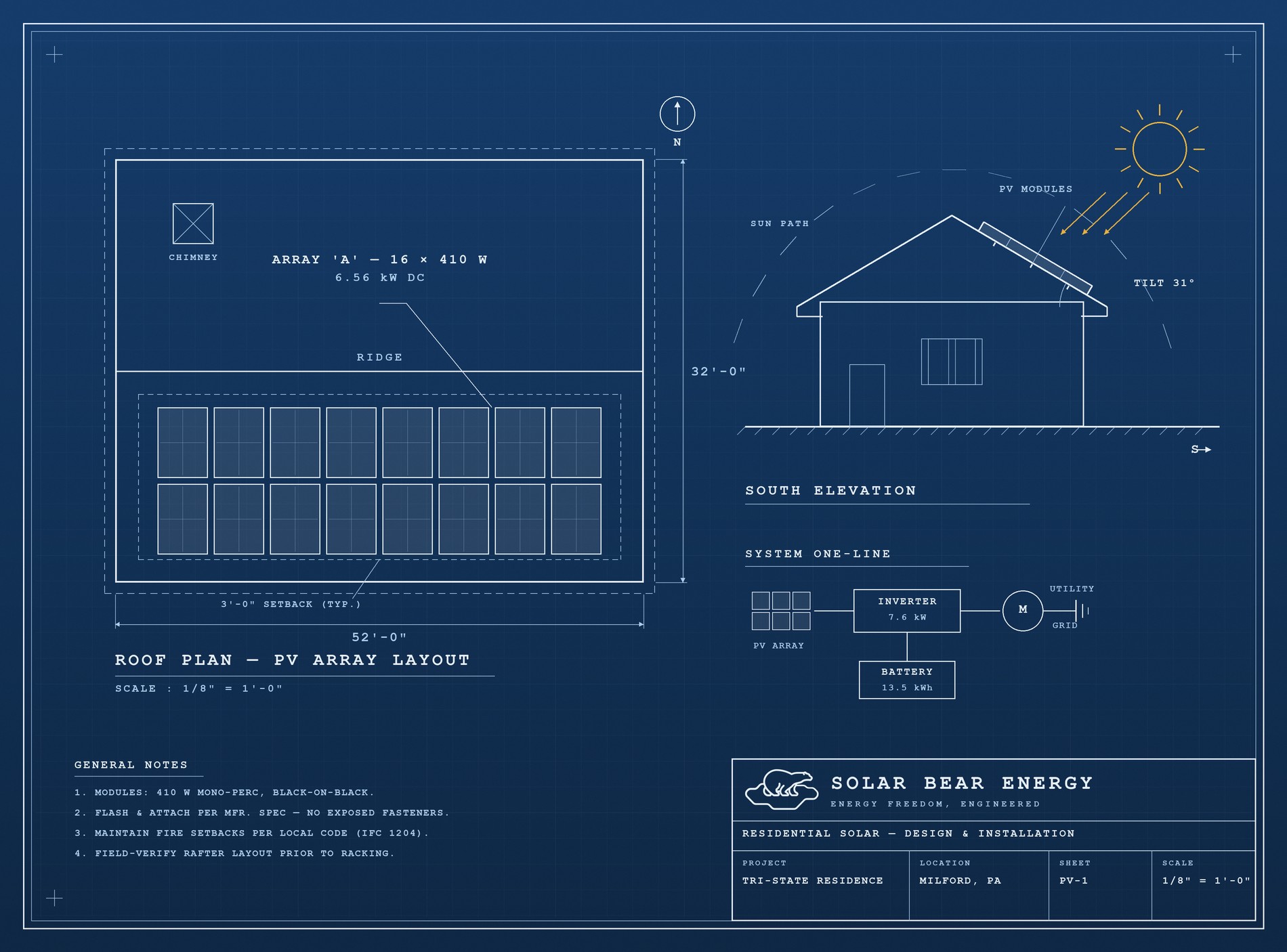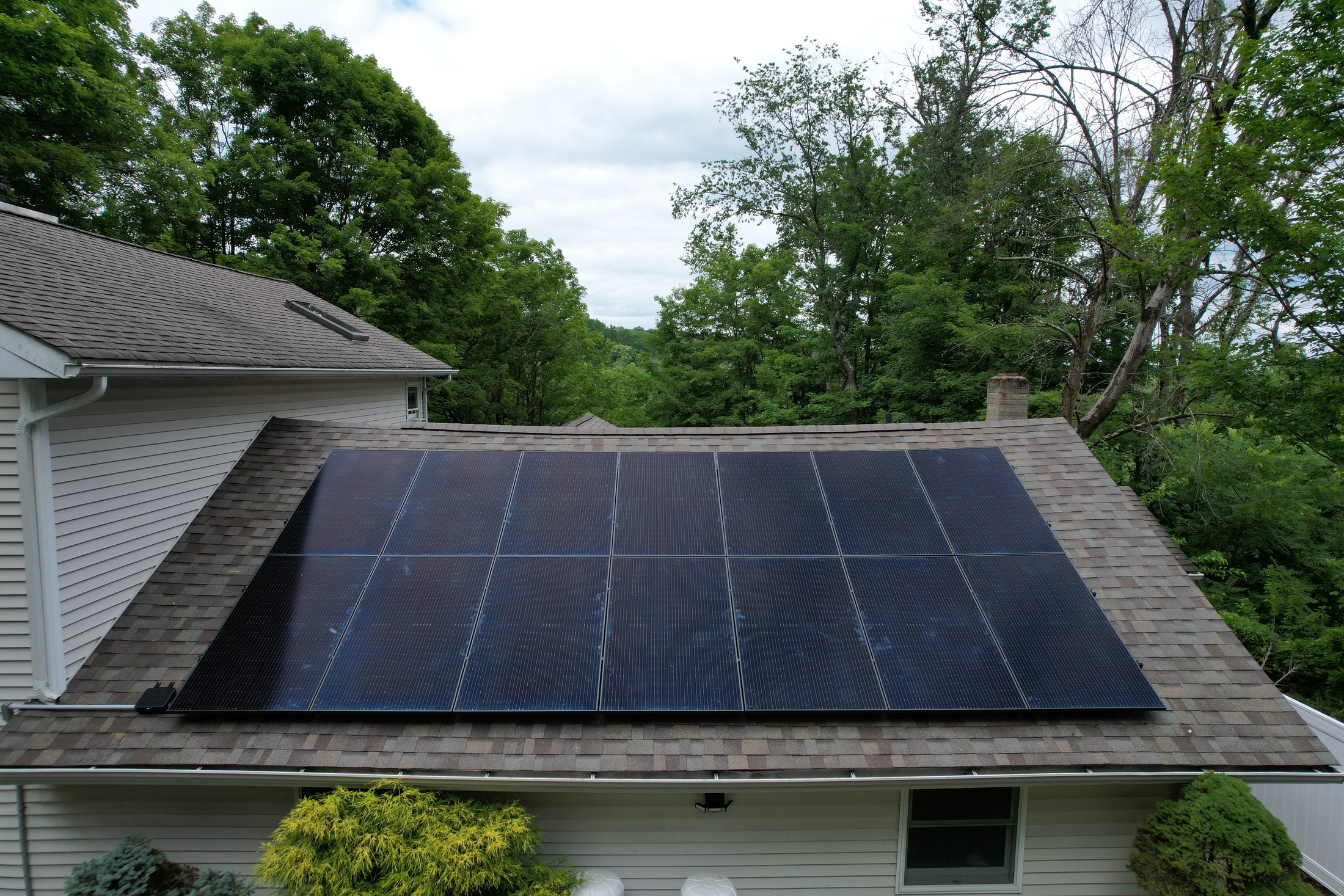
The price to compare is the supply half of your electric bill and nothing else. It is the per-kilowatt-hour price your distribution company charges for generation if you have not signed with a competitive supplier, and its whole job is to be the number you hold a supplier's offer against. It does not include the charges for moving power down your road. So a cheaper shopping rate lowers one part of the bill and leaves the other part alone. If you have an array on the roof, that same number also decides what your leftover kilowatt-hours are worth once a year.
What the price to compare actually measures
The Pennsylvania Public Utility Commission defines it plainly in its own bill breakdown sheet: the price to compare is the price per kilowatt-hour your electric distribution company will charge, and a competitive supplier will give you its own price so you can make an apples-to-apples comparison on the generation portion of the bill. That phrase, generation portion, is the whole point. The PUC's shopping worksheet says the same thing in the fine print, reminding consumers that the comparison covers generation prices and that your actual bill will also include the cost of delivering your monthly electric service.
If you are on PPL, the default supply price is set by auction rather than by negotiation. PPL describes its own process this way: the company does not own the power plants, it buys power for non-shopping customers through competitive auctions under a default supply plan approved by the PUC, and the resulting price to compare changes twice a year. Two components sit inside that number. There is a generation supply charge, and there is a transmission service charge that covers the cost of the high-voltage backbone. PPL has explained that the transmission service charge is adjusted annually on June 1.
We are deliberately not printing a rate in this post. It would be stale by December. PPL keeps every price-to-compare period and a rate calculator posted on its own site, and the number also prints on your bill. Read it there. Statewide, the PUC confirmed this past spring that distribution companies adjust their prices to compare on June 1 and that those changes only affect customers on default service, which is a useful reminder that a reset headline may not apply to you at all.
The half of the bill no supplier can touch
Delivery is the other half, and it is a different animal. The generation price is market driven, and the PUC says so on the same sheet: a competitive supplier's price is unregulated by the Commission, while the distribution portion stays regulated by it. That is why distribution rates move through a rate proceeding at the Commission rather than through an auction, and why a change there shows up on the bill of a shopping customer and a non-shopping customer alike. We wrote about the most recent round in what changed on Milford area electric bills this year.
The practical version: shopping is a lever on one line item. Nobody selling you a supply rate at your kitchen table can reduce the customer charge or the per-kilowatt-hour distribution charge, and if they imply otherwise, that is the moment to ask for the contract in writing.
| Supply, what the price to compare measures | Delivery, the distribution side | |
|---|---|---|
| What it pays for | The electricity itself, plus transmission across the regional grid | Poles, wires, transformers, meters, line crews, restoration |
| Who sets the price | Default service auction for non-shoppers, or your supplier contract if you shopped | Your utility, through a PUC rate proceeding |
| How often it moves | PPL resets its price to compare twice a year | When a rate case or an approved rider changes it |
| Can you shop it | Yes, through PaPowerSwitch or directly with a licensed supplier | No |
| What an array does to it | Reduces the kilowatt-hours you buy at that price | Reduces the per-kilowatt-hour portion, not the fixed customer charge |
| Role in net metering | Sets the value of leftover kilowatt-hours at the annual reconciliation | Included in the full retail credit you get month to month |
The PUC's own shopping list of licensed suppliers lives at PaPowerSwitch, which is run by the Commission rather than by a marketer. If you shop at all, shop there first.
What this means for a house with an array on it
Here is where the price to compare stops being trivia. Pennsylvania net metering runs on two clocks, and they pay differently.
Month to month, you do well. The regulation requires that the distribution company credit a customer-generator at the full retail kilowatt-hour rate, including generation, transmission and distribution charges, for each kilowatt-hour produced, up to the total amount of electricity used during the billing period. Both halves of the bill are in that credit. A kilowatt-hour your array offsets in June is worth the supply line and the delivery line together.
Then there is the annual clock. Anything still sitting in the bank at the end of the year gets settled differently, because the same regulation directs that at the end of each year the default service provider compensates the customer-generator for remaining excess kilowatt-hours at its price to compare rate. PPL's net metering rider spells out the timing: excess kilowatt-hours accumulate until the end of the PJM planning period ending May 31 each year, at which point the company compensates the customer-generator at its Rate Schedule Price To Compare. The same rider notes that the customer-generator is still responsible for the customer charge and other applicable charges under the rate schedule.
Read those two paragraphs together and you have the design rule we work to. A kilowatt-hour you use behind your own meter, or offset inside the same billing period, carries the full retail value. A kilowatt-hour you bank past the end of May carries the supply-only value. That gap is not a scandal, it is just the rule, and it is the reason we size an array to a house's actual consumption history rather than to the amount of open roof. An oversized system in Dingman Township does not fail. It just gets paid less for the part it oversized. There is more detail on how the settlement shows up on the bill in our post on the Pennsylvania net metering true-up, and examples of how we have laid out arrays on local roofs on the projects page.
It also explains part of why batteries keep coming up in this footprint. Storage does not change either rate. What it changes is when you buy, so the kilowatt-hours you make in the afternoon can come back out at seven in the evening at full retail value instead of riding the bank toward a supply-only settlement in May. Backup during a Pike County ice storm is usually the reason people call, and the rate treatment is the second argument, not the first. We went through both in the Poconos battery backup guide.
Send us a photo of both pages of your latest bill and tell us which utility bills your address. We will point at the supply line, point at the delivery line, and tell you plainly which one an array touches and by roughly how much of your usage. If you would rather just ask a question, the office line is (570) 500-2327, or start with the service form.
Shopping and net metering do not always mix
This is the part that almost never makes it into a supplier's sales script, and it is the reason this post exists.
First, if you buy generation from a competitive supplier, your net metering terms are not automatically the ones in the utility tariff. The regulation is explicit that the credit or compensation terms for excess electricity produced by customer-generators who are customers of electric generation suppliers must be stated in the service agreement between them. The PUC's own consumer sheet on the Alternative Energy Portfolio Standards Act describes the net metering standards as covering how customer-generators are metered and compensated by distribution companies and by generation suppliers. So the question to put to any supplier, in writing, before you sign: how do you handle net metered accounts, and what happens to my banked kilowatt-hours.
Second, and this one surprises people, switching resets your net metering year. The regulation says that if a customer-generator switches electricity suppliers, the distribution company treats the end of the service period as if it were the end of the year. If you switch in October, the bank you built over the summer is settled then, at the price to compare, instead of carrying into the dark months when you would have used it at full retail value. If you are going to shop and you are net metered, the timing of the switch matters as much as the rate.
If you are still deciding whether to own the array at all, the credit mechanics are different again under a lease or a power purchase agreement, and we laid that out on ownership versus PPA.
Who this is not right for
Shopping is not a universal good. Some honest cases where we tell people to leave it alone:
- You are net metered and mid-year. See above. A switch in autumn closes your net metering year early and cashes your bank at the supply-only rate.
- You are hoping to fix a delivery increase. If what grew on your bill was the distribution side, no supplier offer addresses it. Insulation, a heat pump tune, and a smaller usage number address it.
- You are on budget billing and think it locks your rate. The PUC notes that budget billing averages bills out over 12 months but is subject to quarterly adjustments based on usage, so it smooths the cash flow rather than fixing the price.
- You will not read the terms. PPL's own reminder to shopping customers is to read the terms and conditions carefully for the price, expiration dates and potential cancellation fees, and the PUC adds that you should watch for renewal notices and know your contract expiration date. A teaser rate that rolls to variable is how most of the bad stories in this county start.
- Your address may not be in a shopping territory. The PUC notes competitive offers may not be available in all areas. Put your own address into PaPowerSwitch rather than assuming, because which company serves a house here is decided by the address and not by the township line.
If you are across a state line
Half our service area is not in Pennsylvania, and the vocabulary changes at the river.
In New York, the split is the same in substance but the term is not. The Department of Public Service explains that the supply portion of your bill is for the energy you use, which can be bought from an ESCO or from your local utility, and that supply costs do not include your utility delivery charges. If you are in Port Jervis, Otisville or Monticello, do not go looking for a line labelled price to compare.
In New Jersey, default supply has its own name. The Board of Public Utilities describes basic generation service as the utility's obligation to supply electricity for customers who have not switched to a third party supplier, with those charges regulated by the Board. Montague and Sandyston homeowners get the same two-halves bill under different labels.
Whichever side of the line you are on, the interconnection paperwork is its own subject, and we walked through what the approval letter is and when you may switch an array on in permission to operate, explained.
One thing that is no longer part of the math
People still ask us to work an incentive into the bill conversation. The federal residential clean energy credit is over. The IRS instructions for Form 5695 state that residential clean energy credits cannot be claimed for expenditures made after December 31, 2025. If a salesperson is still building your numbers around it in 2026, that is a reason to stop the conversation. Talk to your own tax preparer about your own return. We install equipment, we do not give tax advice.
How to read your own bill in five minutes
Get the bill out, both pages.
- Find the supply section and the per-kilowatt-hour price in it. If a supplier's name is printed there instead of your utility's, you are shopping already.
- Find the delivery or distribution section. Note the fixed customer charge separately from the per-kilowatt-hour distribution charge, because an array reduces the second and not the first.
- Find your kilowatt-hours used for the month, and the 12-month graph if your utility prints one. That history, not a rule of thumb, is what an array should be sized against.
- Compare the price to compare on the bill to what is posted for your current period, then to offers on PaPowerSwitch, adding any monthly supplier fee before you decide anything.
- If you are net metered, find your banked kilowatt-hour balance and note how close you are to the end-of-May reconciliation.
That is the whole exercise. When you want a second set of eyes on it, or you want to know what an array would realistically do to the usage number, our solar, battery, HVAC and roofing services all start the same way, with your bill and your address. Call the office at (570) 500-2327 or send the details through the contact form, and tell us which utility bills you so we are looking at the right tariff from the first phone call.
What we would tell a homeowner considering this
- The price to compare covers the generation side of your bill. It is the benchmark for a supplier offer, not your total cost per kilowatt-hour.
- Distribution charges stay with your utility and stay regulated by the PUC. No shopping rate reduces them.
- Under 52 Pa. Code 75.13, monthly net metering credit is at the full retail rate including distribution, but leftover kilowatt-hours at the end of the year are compensated at the price to compare.
- If you switch suppliers mid-year, the PA Code treats the end of that service period as the end of your net metering year.
- Read the current price to compare off PPL's own posting and off your bill before you compare anything.