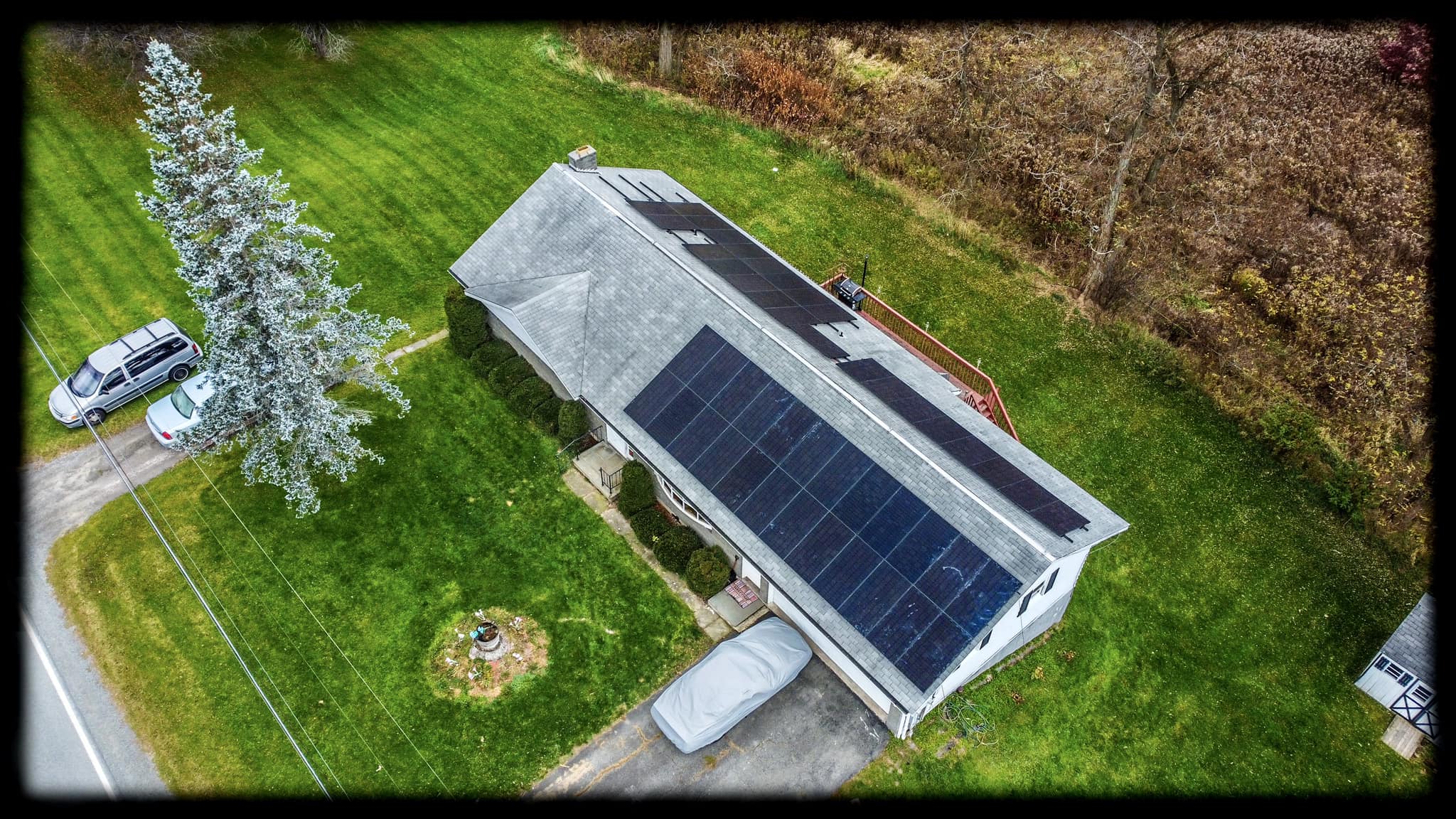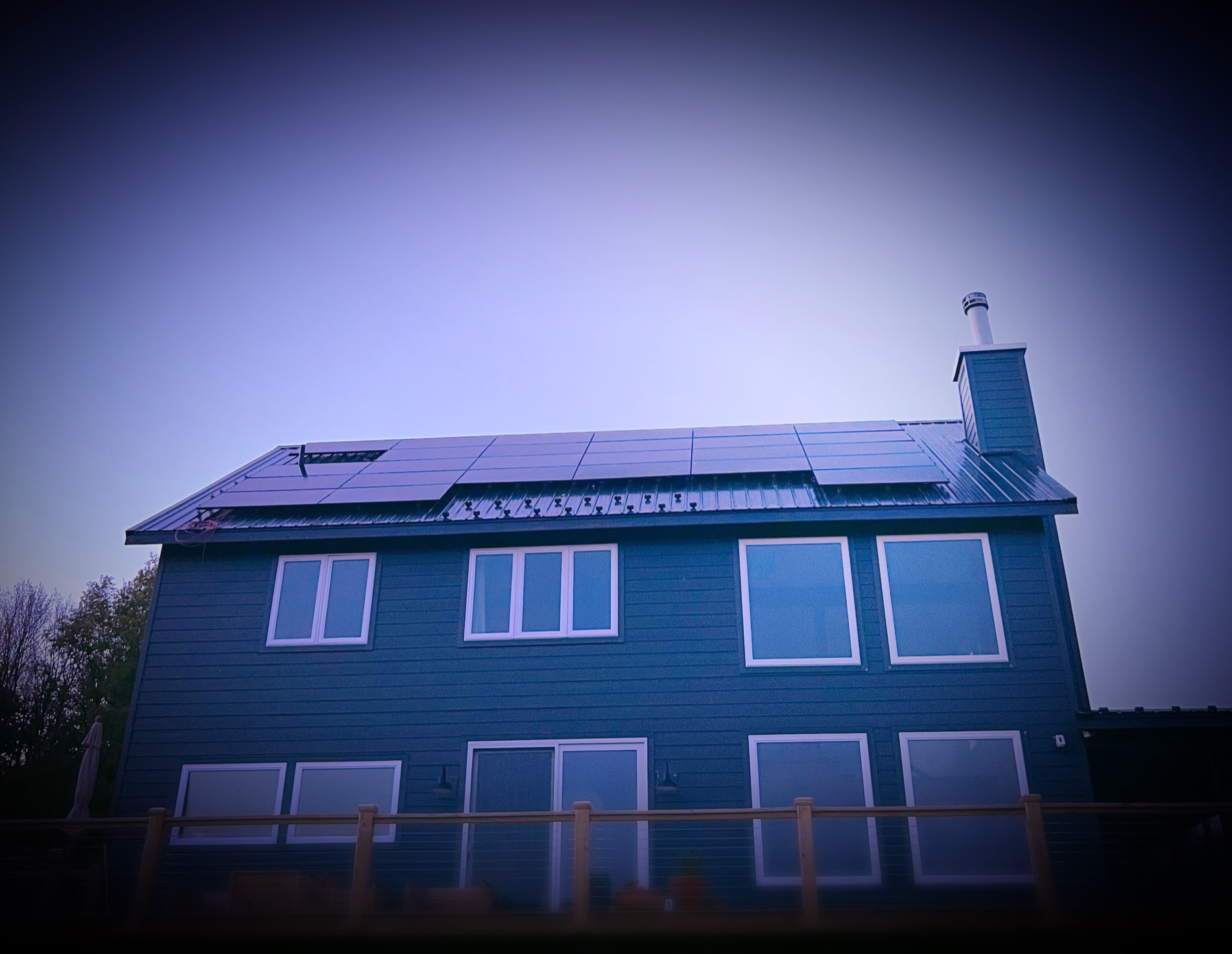
New York still pays a direct incentive for home battery storage. NYSERDA's Residential Energy Storage Incentive is a fixed amount per kilowatt-hour of installed capacity, paid on up to 25 kilowatt-hours, and Orange and Sullivan County both sit in the Rest of State region. Three rules decide whether a project actually collects it: a NYSERDA Participating Contractor has to file the application, the application has to be in before the system is interconnected, and the rate steps down each time a regional block fills. There is no equivalent for a homeowner across the river in Pike County.
What the NYSERDA storage incentive actually is
NYSERDA runs residential storage as a megawatt-hour block program. In the agency's own description, it is "a series of capacity-based funding blocks or segments, with incentive rates and funding amounts set for predetermined blocks that are subdivided by market segment and region." Translated: there is a pot of money for each region, it pays a published rate per kilowatt-hour, and when the pot empties the next one opens at a lower rate.
The mechanics that matter to a homeowner are short:
- It is paid per kilowatt-hour of installed storage capacity, measured in AC based on the manufacturer's usable energy at the start of system operation, on up to 25 kilowatt-hours. NYSERDA's homeowner page also states the system must be sized 25 kilowatts or less.
- Standalone storage counts. So does storage paired with a solar array, new or existing. You do not have to buy panels to qualify.
- The rate is set by the block in effect when a complete application is submitted, not when the truck shows up and not when the system is switched on.
- It is first-come, first-served, tracked per region on a public dashboard.
We are deliberately not printing a rate in this post. Rates change as blocks subscribe, and a number typed into a blog in July is a snapshot, not a quote. The current figure for your region lives on NYSERDA's residential incentive dashboard, and the eligibility rules live on NYSERDA's residential storage page. Anyone who quotes you a rate without opening one of those two pages in front of you is working from memory.
Why "Rest of State" is the phrase that matters here
NYSERDA divides the storage program into four regions: New York City, Westchester, Long Island, and Rest of State. Orange and Sullivan County are Rest of State, along with Dutchess, Ulster, Greene and Putnam.
That has a consequence people miss. Rest of State is one shared pool covering everything outside the city, Westchester and the Island, so the block your Sullivan County project lands in is driven by statewide demand, including every battery installed around Rochester, Syracuse and Albany. Your neighbors are not the only ones filling the pot. That is a documented program mechanic and not a sales line, but it does mean the rate available in the fall is not automatically the rate available today.
The rules that quietly disqualify projects
Most of NYSERDA's eligibility list is what you would expect from a state program. A few items are not, and they are the ones that end projects. Straight from the program manual:
- The system must be interconnected to the grid after NYSERDA receives the application. A system already interconnected before it is submitted is not eligible. If you buy a battery, get it energized, and then go looking for the rebate, you have already lost it. This single rule is why the sequencing conversation has to happen before anyone orders equipment.
- A Participating Contractor files it, not you. Applications are submitted through the NYSERDA Portal, must list both a Contractor and a Builder, and must be signed by the customer. There is no homeowner path.
- The equipment has to be listed and warranted. UL 9540 listing on the storage system, inverters approved by the utility you are interconnecting with, and a minimum ten-year system warranty on purchased systems.
- The system has to enroll in a qualifying utility load-management program where one is available. In our part of New York that means the Orange and Rockland Smart Savers program, required for applications submitted on or after May 1, 2026, or the NYSEG Energy Storage Solutions program, required for applications on or after April 1, 2026.
- One application per meter, and the meter has to be on a residential service classification.
- The system has to be placed in service by December 31, 2030.
There is also an Inclusive Storage Incentive: a separate, higher-rate statewide block for projects in Disadvantaged Communities or serving income-eligible households. It cannot be combined with the standard incentive, and eligibility is verified by NYSERDA from the project address and income documentation. Parts of Sullivan County qualify on the geographic test. It is worth asking about before anyone assumes the standard rate.
Before you sign anything, ask the company quoting you to show you their current listing on NYSERDA's Participating Contractor list for residential energy storage, and check it yourself. It takes a minute and it is the single fastest way to tell whether a company can actually deliver what its ad copy implies. We will confirm in writing who is filing the NYSERDA application on your project before you commit to anything.
What we would actually put on the wall
Equipment selection follows the house, not the incentive. What changes in New York is that the listing and warranty requirements above are not optional, so the shortlist is narrower than it looks in a catalog.
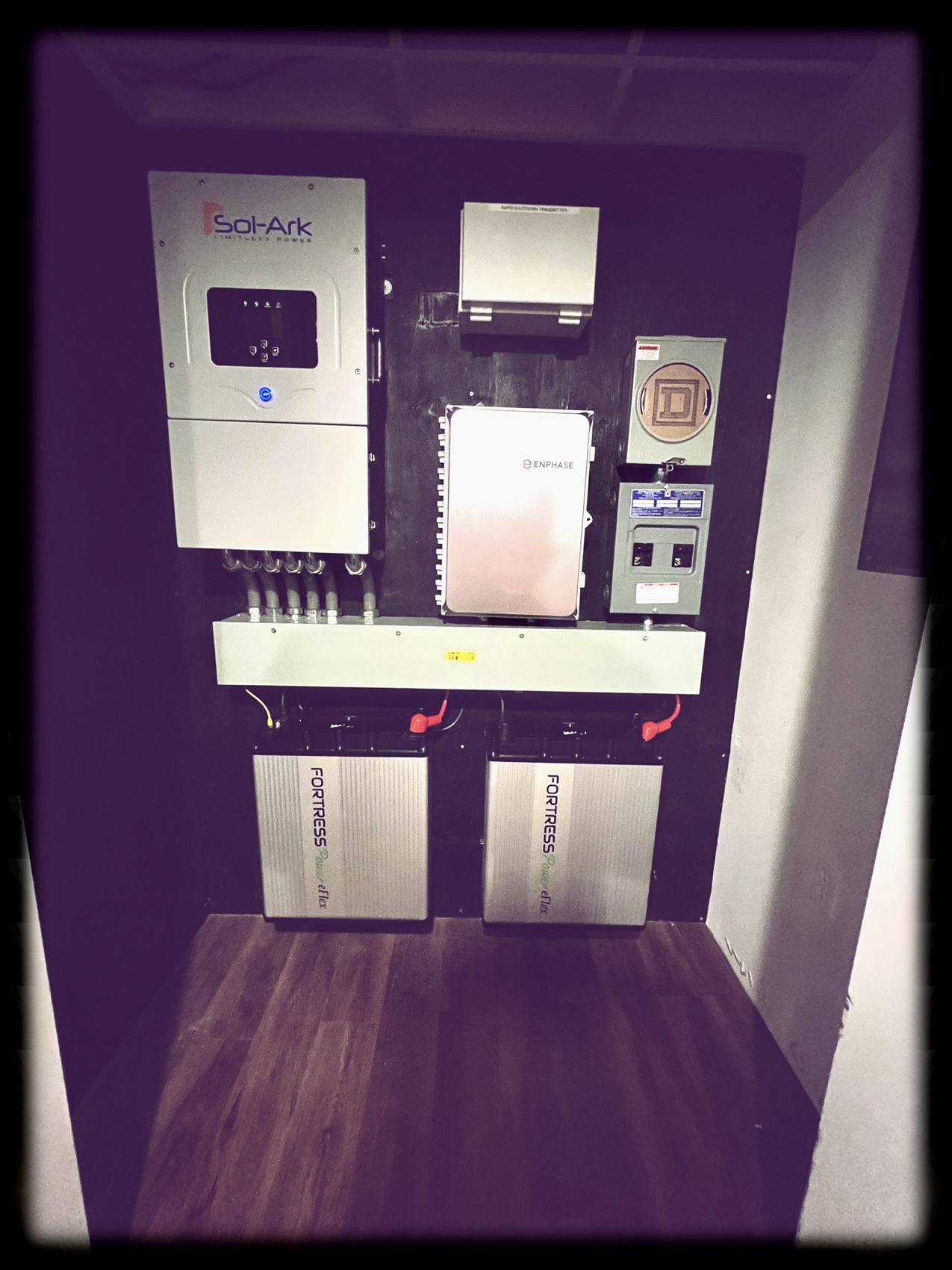
We install and service EG4, Sol-Ark, SMA, SolarEdge, Sungrow, SunPower, APsmart, Generac, Enphase and Fortress Power. For a rural New York home with a deep well and a boiler, the conversation usually starts with a hybrid inverter, because it puts storage, solar and a generator input in one box and leaves a clean path to add capacity later. Where there is already an array on the roof, the existing inverter decides most of it, and sometimes the honest answer is that a retrofit onto old, undocumented equipment is not something we are willing to sign our name to. We wrote out that whole list and the reasoning behind it in the equipment we install and what we do not service.
One thing worth saying plainly: we install and service Tesla systems, including Powerwall and their inverters. If that is what you have, we can work on it.
Not sure whether your house wants storage, a generator, or both? Tell us about the property and we will tell you what we would do if it were ours.
The local wrinkle: two counties, three utilities
This is where a lot of otherwise-good advice falls apart. Orange and Sullivan County are not served by one utility. New York's Department of Public Service lists three electric utilities operating in each of them, and the differences between them are operational, not cosmetic.
Orange and Rockland Utilities covers most of western and southern Orange County. Its municipality list runs through Port Jervis, Deerpark, Middletown, Wallkill, Goshen, Chester, Monroe, Warwick and Tuxedo, and it reaches into Sullivan County as well. Port Jervis is across the bridge from our office, so this is the territory we know best. O&R's Smart Savers program is the load-management enrollment NYSERDA now requires for storage applications on those meters.
Central Hudson covers the eastern side of Orange County toward Newburgh and the river, plus portions of Sullivan, Ulster and Dutchess.
NYSEG operates in both counties as well, and it is the dominant electric utility across much of rural Sullivan.
Three utilities means three interconnection queues, three sets of documentation habits, and three different answers to "which program do I have to enroll the battery in." The first thing we do on a New York site evaluation is confirm which one your meter is actually on, because that determines the paperwork more than the equipment does. If a company cannot tell you which utility serves your road, they have not done many jobs near you. We walked through the whole sequence, from signed design to permission to operate, in what happens between signing and switch-on.
Battery only, or battery with an array?
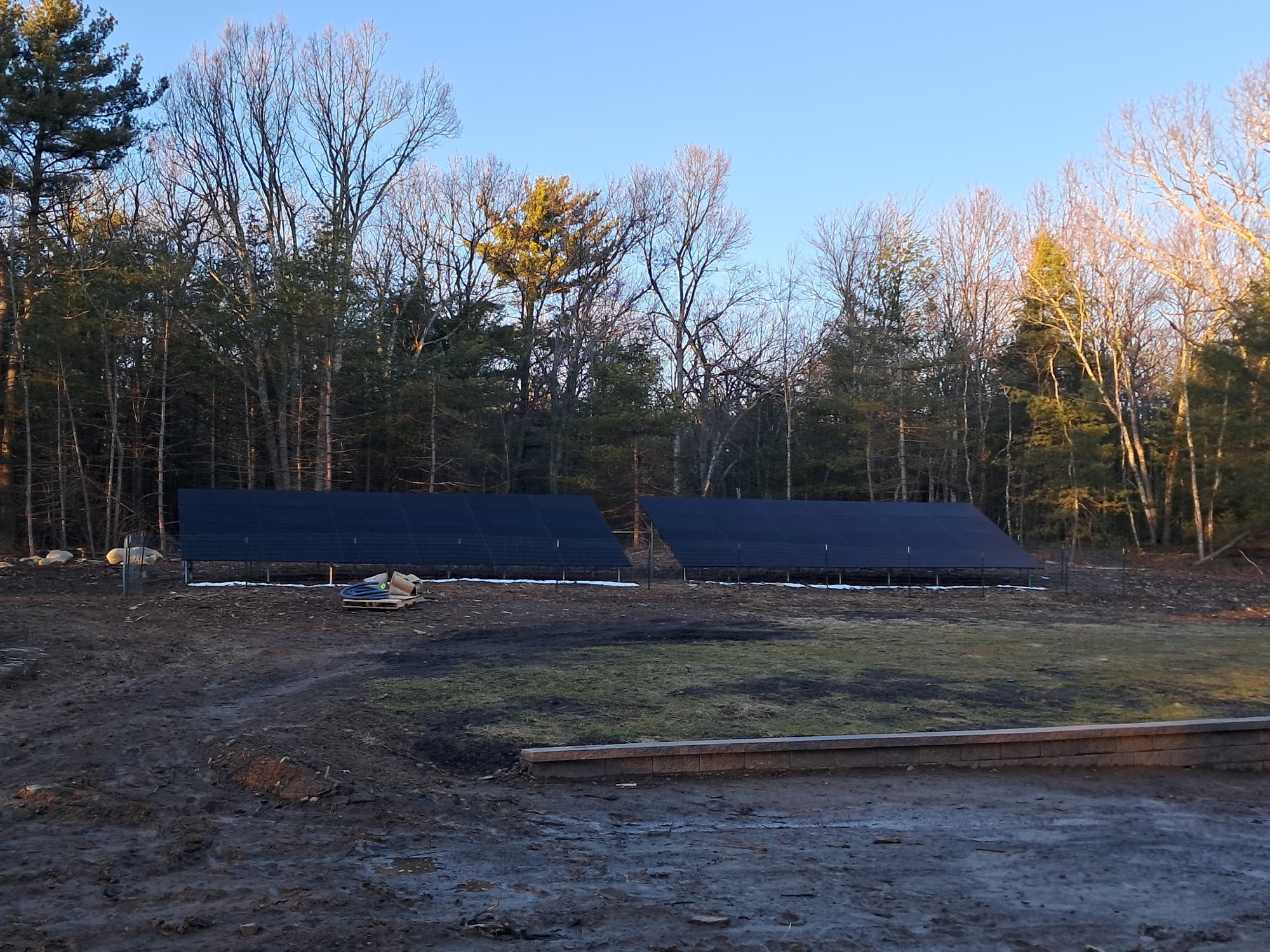
Both qualify for the storage incentive. What differs is everything else attached to the decision.
| In New York | Storage only | Storage added to a new solar array |
|---|---|---|
| NYSERDA residential storage incentive | Yes | Yes |
| NY State solar energy system equipment credit | No | Yes |
| Phase One net metering on exports | Not applicable | Yes |
| Customer Benefit Contribution charge applies | No | Yes |
| Carries the house through an outage | Yes | Yes |
| Recharges during a multi-day outage | Grid only | From the array, weather permitting |
| Reduces what you buy from the utility day to day | Marginally | Yes |
Two rows there need explaining honestly, because they are the ones that get skipped in a sales pitch.
Net metering. New York's Phase One net metering credits exports at the full retail rate, and a residential system interconnected today locks those terms in for twenty years. That is genuinely favorable and it is the main reason pairing storage with a new array still pencils differently in New York than it does in Pennsylvania.
The Customer Benefit Contribution. Solar customers in New York also pay a monthly charge based on the size of the installed solar system, set separately by each utility and published annually by NYSERDA. It is modest next to a typical electric bill, but it is real, it recurs, and any installer who does not put it in front of you is not showing you the whole picture. Standalone storage with no PV does not trigger it.
One more piece of the New York picture: the state's Solar Energy System Equipment Credit, worth 25 percent of qualified solar energy system equipment expenditures up to a statutory cap, carried forward for as long as five years. Read the statute's definition before you assume it covers a battery. It describes components "utilizing solar radiation, which, when installed in a residence, produces energy designed to provide heating, cooling, hot water, or electricity." That is written around generation. We do not tell anyone a standalone battery qualifies for it, and we would want your tax preparer to read the state's own instructions before you count on anything. Now that the residential federal credit is gone, the state-level picture is the whole picture, which is exactly why it is worth getting right. We went through what actually survived, state by state, in what changed for homeowners in 2026, and our incentives page tracks what is currently live across all three states.
The outage case, which is the real reason people call
Incentives get people to pick up the phone. Outages are why they follow through.
A rural home in Sullivan or western Orange County is usually on a well and a septic system. When the power drops, you lose water first, then the toilets, then the boiler controls, and the house becomes uninhabitable long before the food in the refrigerator goes bad. That is a very different failure than a suburb losing its lights.
Recent storms have made the point without help from us. One April nor'easter left roughly 8,700 NYSEG customers and about 2,300 Orange and Rockland customers in the dark in Sullivan County at the same time, with Central Hudson counting a few dozen more. One county, one storm, three utilities running three separate restorations.
Directly across the Delaware, PPL's Fourth of July weekend storms this year knocked out more than 264,000 customers, drew more than 3,000 personnel, and produced more than 2,360 individual damage locations. PPL described it as one of the most impactful storm events in the company's history, and it drew its largest restoration workforce since Hurricane Sandy in 2012. Weather in this corner of the map does not check which side of the river you live on.
We will not tell you how many hours a battery will run your house. Nobody can answer that without a load calculation and a look at your panel schedule, and the number changes completely depending on whether the electric range is inside the backup or outside it. What we will do is count the loads that make your house livable, size around those, and tell you plainly if the honest answer is a standby generator instead. That reasoning is laid out in full in our guide to battery backup in the Poconos and the Orange County hills, and it applies on both sides of the river.
Who this is not right for
- Homeowners in Pennsylvania and New Jersey. This is a New York State program funded by New York ratepayers. It stops at the state line. If you are in Milford, Dingmans Ferry, Shohola or Sussex County, your options are different, and we will tell you what they are instead of implying otherwise.
- Anyone who already interconnected a battery. The application must precede interconnection. There is no retroactive path.
- Houses on a nonresidential service classification. The residential incentive is not available to those meters, with a narrow exception for one-to-four-unit regulated affordable housing.
- Homes heated with electric resistance heat. Baseboard and electric furnaces are enormous loads. Backing up meaningful heat with storage in that scenario is not practical, and the incentive does not change that arithmetic.
- People shopping on price alone. We are a licensed contractor doing permitted, inspected work under a design we will still stand behind in a decade. That is not the least expensive way to buy a battery and we do not pretend it is.
- Anyone being told the rebate makes the project free. It does not. It reduces the cost of a real construction project. Treat any pitch built on the incentive rather than on your house with the suspicion it deserves.
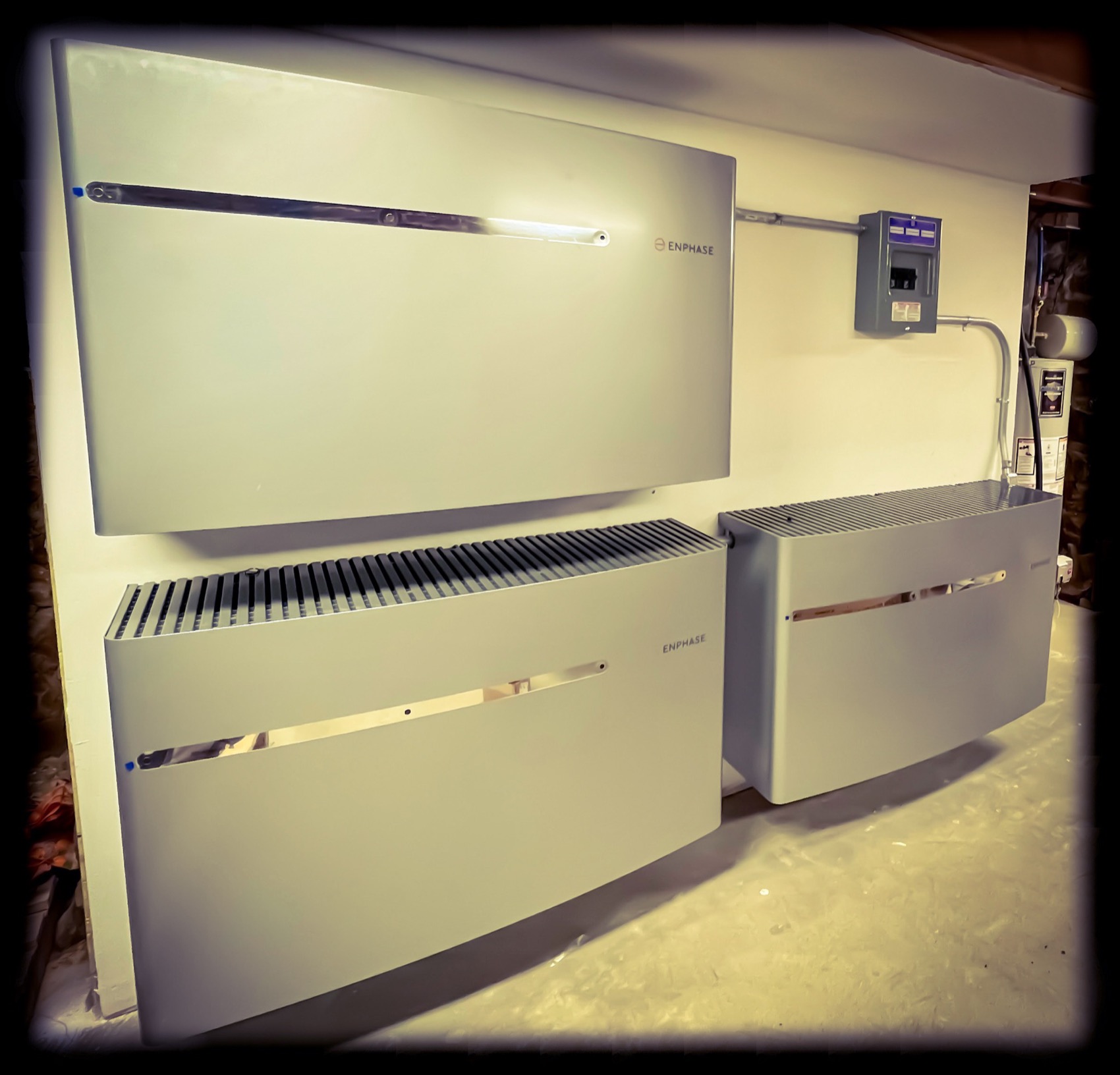
What a site evaluation actually gets you
We are not going to quote a battery over the phone. A New York storage evaluation means someone walks the property, opens the panel, reads the meter, works out which utility your address is on, pulls up the current Rest of State block on the dashboard while you are standing there, and counts the loads that decide the design.
If you are still working out whether to own the system outright, read ownership versus a lease or PPA first, because storage on a leased system is a different animal and the state credit treats those arrangements differently. If you want to see the work rather than read about it, the project gallery is the honest version. And the full range of what we do, from storage and solar to roofing, HVAC and ADT security, is on our services page.
The block rate for your address is a fact, not a sales tactic, and it is on a public dashboard you can read yourself. Send us the address and your outage history and we will look at it with you.
What we would tell a homeowner considering this
- Ask any installer to show you their current NYSERDA Participating Contractor listing for residential energy storage before you sign. Homeowners cannot file this application themselves.
- Get the application in before the utility interconnects the system. A system that is already connected is disqualified, and there is no appeal for that.
- Find out which utility your meter is on first. Orange and Rockland, Central Hudson and NYSEG all operate in these two counties and they do not run the same programs.
- Size the battery around your well pump, your heating controls and your septic pump. The incentive should shape the budget, not the design.
- The rate on the dashboard today is the rate for today. Blocks step down as they fill. That is a reason to decide, not a reason to panic.