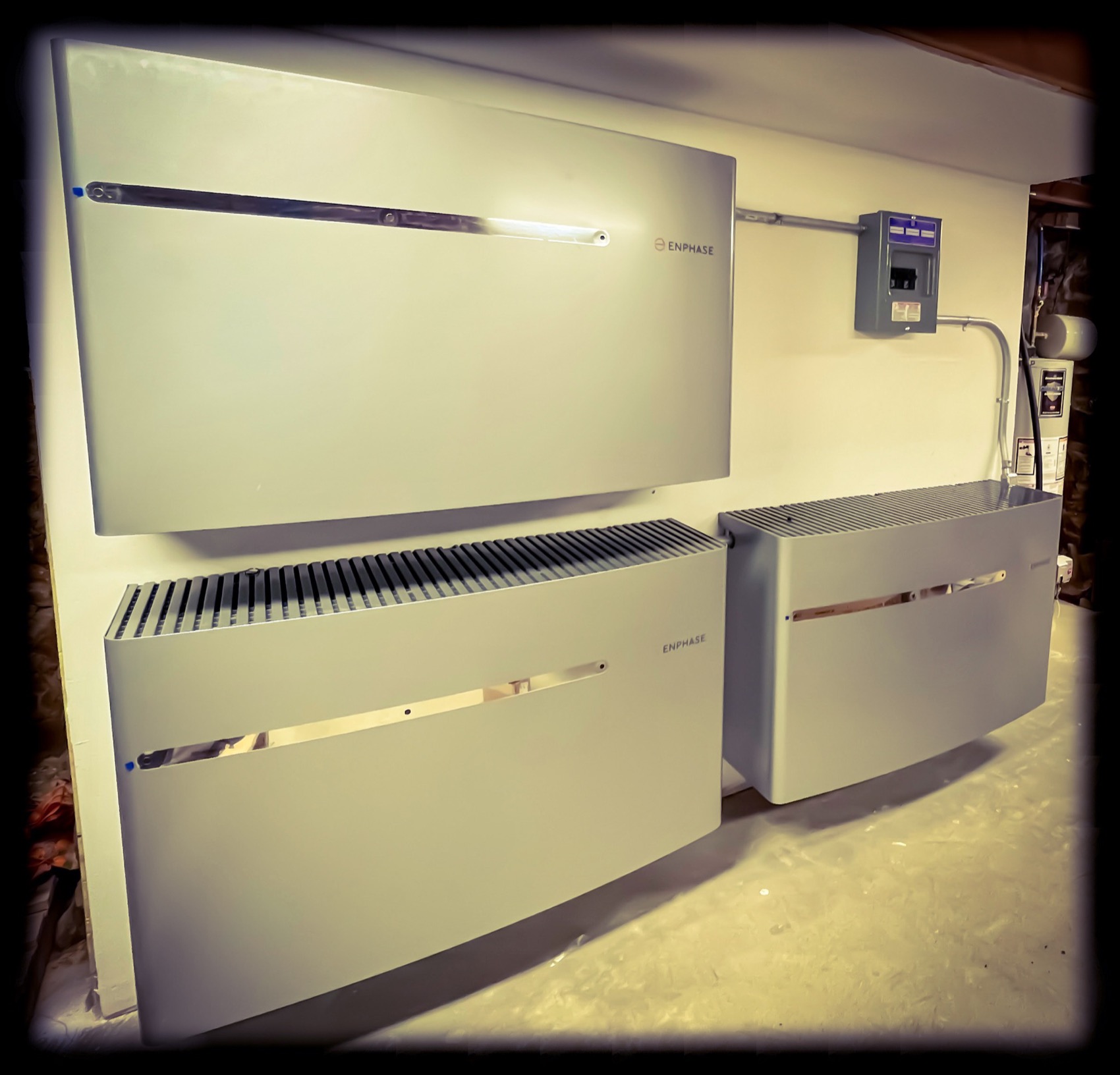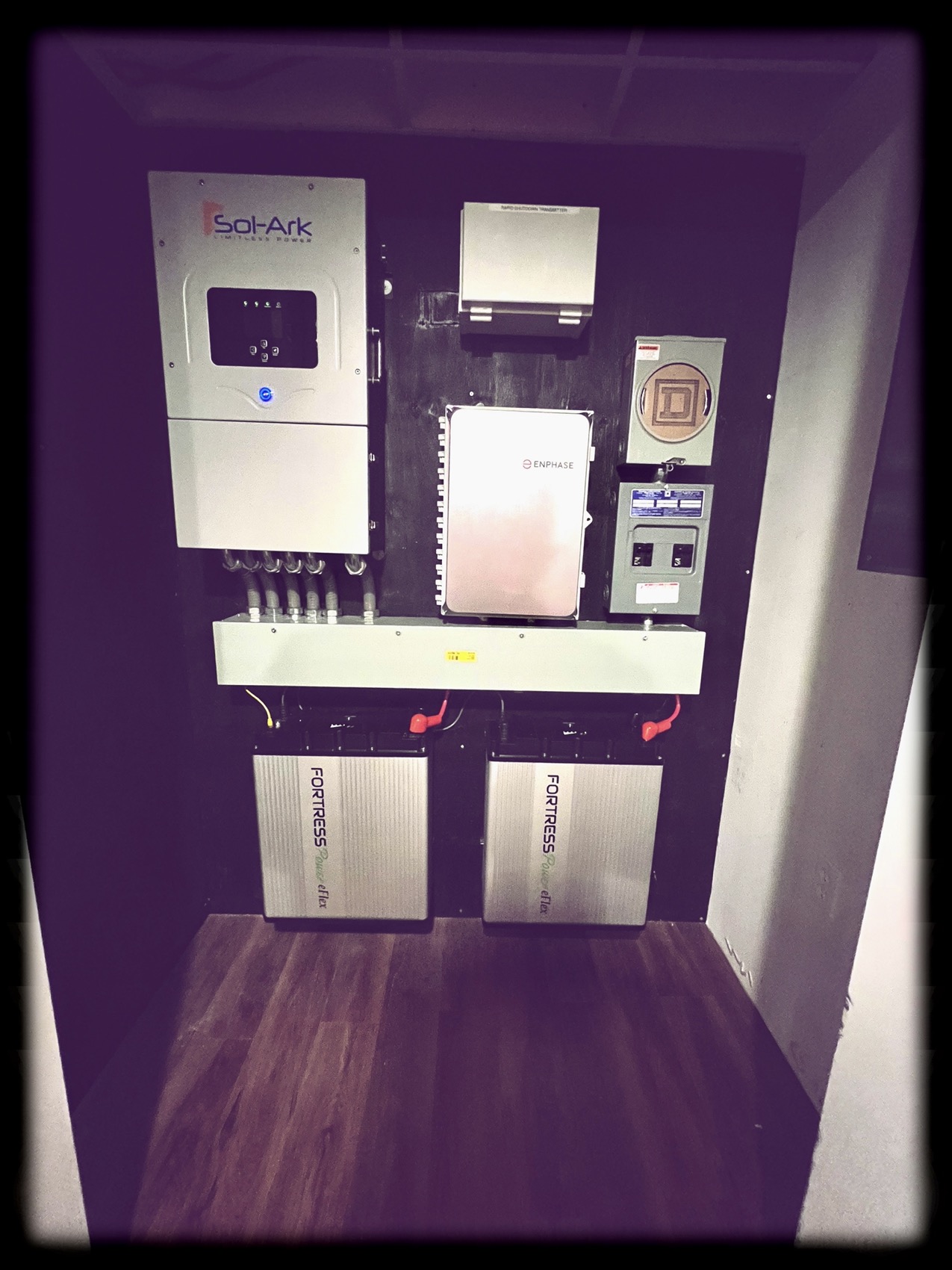
Almost always the part. Rarely the labor. Almost never the trip. Most residential inverter warranties in this corner of Pennsylvania, New York and New Jersey run ten years on the unit and cover a repaired or replacement inverter, sometimes with freight in one direction. Taking the dead one off the wall, hanging the new one, re-commissioning it and driving to your house are usually yours. At year eight the paper matters less than whether anyone is still standing who will read it, file it and come out.
Start with what the law makes the warranty tell you
You do not have to take a manufacturer's word for what is covered, because federal rules require the document to spell it out. Under 16 CFR 701.3, a written consumer product warranty has to disclose, in a single document and in plain language, a description of the parts and components covered and where necessary excluded, a statement of what the warrantor will do in the event of a defect including the items or services it will pay for or provide and where necessary for clarification those it will not, the point in time or event at which the warranty term begins, a step-by-step explanation of the procedure for obtaining performance, and the persons or class of persons authorized to perform warranty obligations.
Read that list again as a checklist and the whole subject gets easier. Four of those six items are the ones homeowners get burned on: what is excluded, what will not be paid for, when the clock started, and who is allowed to do the work.
The same rules say the word on the cover is not decorative. The FTC's guide to federal warranty law explains that the Magnuson-Moss Warranty Act requires a written warranty on a consumer product to be titled either full or limited, and that a business offering a written warranty cannot disclaim the implied warranties that arise under state law. Every inverter warranty we have ever read in this footprint says limited. That is a meaningful word, not a modest one.
Parts, labor and the truck roll are three separate costs
Separate them in your head before you call anyone.
The part. This is what a limited product warranty is about. The manufacturer issues a return authorization and a repaired or replacement unit comes. Inside the term, this is the piece that usually goes your way.
The freight. Sometimes covered, sometimes only one direction. The Sol-Ark L3 HVR warranty states that where the claim is justified Sol-Ark bears the cost of shipping the repaired or replacement unit to the owner or the authorized installer, and that a product returned without a valid authorization may be rejected and returned at the owner's cost. Two directions, two different answers.
The labor and the visit. This is the line nobody budgets for, and it is the one most often excluded outright. The Sol-Ark 15K-2P-N warranty provides a ten-year limited warranty against defects in materials and workmanship, limits liability to repair or replacement at Sol-Ark's discretion, and says the warranty does not cover the costs of installation, removal, shipping except as described, or reinstallation. The same document puts the LCD screen and the fans on a five-year clock rather than ten, which matters because the fan is a very common year-eight failure.
A real swap is not thirty minutes. Somebody drives out, proves the fault is the inverter and not the array, pulls a permit if the township wants one, shuts down and locks out, dismounts a heavy unit, lands the conductors, re-commissions, rebuilds the monitoring account and comes back if the firmware argues. On a hybrid with batteries attached, add the storage configuration. That is ordinary service work, and on a system we did not install it starts with a diagnostic visit, because nobody should order a part off a guess.
Send a photo of the inverter label and the breaker it lands on, tell us the town and which utility bills you, and we will read the document that applies to your serial number and tell you plainly what it leaves to you. No visit needed to answer that. Start with the equipment photo
What the brands say, read against that checklist
Every row below comes from the manufacturer's own published terms, which is the primary source for that manufacturer's promise. Your model number and purchase date govern. Treat this as a map, not as your contract.
| Brand and product | Published term | Labor on the replacement | Freight | When the clock starts, and transfer |
|---|---|---|---|---|
| Sol-Ark 15K-2P-N | 10 years; LCD screen and fans 5 years | Not covered. Installation, removal and reinstallation costs excluded | Shipping excluded except as described in the document | Term begins at initial purchase date; document states Sol-Ark does not warrant workmanship by the installing firm |
| Sol-Ark L3 HVR-60 | 10 years | Excludes costs, including labor, for uninstalling or removing the product | Sol-Ark bears shipping of the repaired or replacement unit to the owner or authorized installer on a justified claim | Registration within 30 days of delivery; a valid return authorization is required |
| EG4 18kPV-12LV | 10-year full parts replacement or full product replacement | A parts and product program; labor is not presented as covered | Not stated as covered | Register within the first year or show proof of purchase from an authorized distributor. Product not bought through an approved vendor is not covered. Removing it from the original site voids it. One-time transferable only if it stays put |
| Generac PWRcell 2 | Inverter 10 years; battery cabinet 10 years; modules 10 years or a stated energy throughput, whichever comes first | The battery cabinet row lists parts, labor and limited travel | Not separately broken out | Begins upon successful registration of the unit. Transferable between owners of the original installation |
| SolarEdge | Base term varies by model; extendable to 20 or 25 years depending on model | Not addressed by the extension, which applies to the inverter only and not to built-in communication accessories | Not addressed | Extensions are priced against the serial number, and as of January 4, 2025 extending requires registration to SolarEdge's online services |
The clearest illustration of the labor problem is a separate contract rather than a warranty. Enphase's Labor Protection Program terms say the contract covers payments to offset labor costs for installing replacement covered property, that it pays the installer, and that Enphase is not responsible for labor reimbursement unless the covered property is also covered under a valid manufacturer's warranty. The FTC treats service contracts as a separate category from warranties, with their own disclosure obligations, and that is exactly the right way to think about it. If the company that bought the labor contract is gone, the labor money has nobody to pay.
We also install and service SMA, and SMA publishes factory warranty terms by product family. We are not going to print a term here for a model we have not matched to a serial number. Send the label.
Why year eight is the bad year
Three clocks run out at once.
The product term is nearly done. Ten years is the common term on hybrid inverters, so a year-eight failure leaves roughly two years of coverage, and the remaining coverage on a replacement unit usually follows the original term rather than restarting. Ask that specific question when you file.
The extension window is closed. Extensions get sold early and almost never late, and at least one major brand now ties the purchase to a registered online account.
And the installer may be gone. The manufacturer warranty survives a contractor failure. The monitoring login, the as-built drawings, the interconnection approval and the person who knows why the conduit runs the way it does usually do not. If you are in that spot, the first job is an inventory of what you actually own. Our completed install portfolio and our equipment and service list are both useful for working out what is on your wall.
The local wrinkle: the utility, and the registry
Whether a like-for-like inverter swap needs anything filed depends on the utility and on whether the replacement is electrically identical to what is listed on your interconnection agreement. That is not a dodge, it is where the authority sits.
In Pennsylvania, interconnection for net-metered customer-generators runs under 52 Pa. Code Chapter 75, Subchapter C, whose stated scope is the interconnection standards that apply to electric distribution companies with customer-generators pursuing net metering. Your EDC administers that, and a changed model number or a changed AC output rating is the thing most likely to put your swap in front of them.
In New York, the Standardized Interconnection Requirements issued through the Department of Public Service expressly include review of modifications affecting the interface at the point of common coupling for existing distributed generation and storage facilities, and the document defines both modification and material modification. If you are in Port Jervis, Monticello or anywhere else on the New York side, that is the framework your utility is working from.
In New Jersey, interconnection and net metering sit in the Board of Public Utilities rules at N.J.A.C. 14:8. The JCP&L electric tariff filed with the BPU states that the customer-generator is responsible for interconnection costs as defined in N.J.A.C. 14:8-5.7 and following, and that it is the customer-generator's responsibility to know the rules associated with net metering service. Read that as a warning label about who owns the paperwork.
We ask the utility before we order the part and we put the answer in the job file. If you want the longer version of how that chain works here, the permission to operate walkthrough covers it.
One more thing specific to Pennsylvania homeowners. Before you hire anyone to do the replacement, check the registration. The Office of Attorney General runs home improvement contractor registration under the Home Improvement Consumer Protection Act, adopted as Act 132 of 2008. The Attorney General's frequently asked questions state that an unregistered home improvement contractor is prohibited from offering or performing home improvements, that registrations are valid for two years and must be renewed biennially, and that the registration number has to be displayed on contracts. The Department of Labor and Industry's contractor licensing page adds that registered contractors must carry minimum insurance and use contracts meeting the law's consumer protection requirements, with the Bureau of Consumer Protection enforcing. Ask for the number. Any honest shop hands it over without a pause.
Who this is not the right read for
Owners in the first two years. Call the company that installed it. The original installer owns the workmanship obligation and the monitoring account, and if they are operating this is their problem to solve.
Tesla owners. Solar Bear Energy does not service Tesla systems. Not the inverters, not Powerwall, not the gateway. If Tesla equipment is on your wall you need a Tesla-certified company.
Anyone whose production is down but whose inverter is fine. A drop in output is not a diagnosis. Shade that grew in over eight years, a failed optimizer, a tripped DC disconnect, snow and a genuine inverter fault all look similar on a monitoring graph. Get the fault code first.
Units bought online and self-installed from a non-approved vendor. EG4's published terms are explicit that product not purchased through an approved vendor is not covered and that removing the product from the original installation site voids the warranty. We can still service the system. The claim path may simply not exist.
Commercial and three-phase sites. Everything above is residential. Commercial warranty language and service agreements are a different animal.
What we would tell a homeowner at year eight
Find the paperwork before you need it. The serial number, the commissioning date, the registration confirmation and the interconnection approval fit in one envelope, and having them turns a two-week claim into a two-day one.
Register the product now if you never did, because federal disclosure rules let a manufacturer condition coverage and several of them do. Sol-Ark's L3 HVR document asks for registration within thirty days of delivery. EG4 asks within the first year.
Treat labor as a line you are responsible for unless a document in your file says otherwise, and be skeptical of anyone who tells you a warranty replacement costs you nothing.
If the inverter is dying and you were already weighing storage, year eight is a fair moment to decide whether you are replacing a string inverter or moving to a hybrid, because doing both at once avoids a second mobilization. We wrote about that build in the EG4 and Sol-Ark hybrid backup post, and about keeping an existing array on its original inverter in the AC-coupling piece. Neither is automatically right.
And pick the installer like you will need them in year eight, because you will. A company that answers, a registration you can look up, and a crew that works on your brand are worth more over twenty years than extra years printed on a certificate. That is the whole argument for a local shop, and it is why who we are is on the site in plain language.
When something is actually faulting, send us the fault code and the address or call the office at (570) 500-2327.
Warranty terms summarized here come from the manufacturers' published documents and the federal, state and utility sources linked inline, read on November 10, 2026. Terms change by model, revision and purchase date, and the document that applies to your equipment is the one in effect for your serial number. Nothing here is legal advice or a service commitment by Solar Bear Energy.
What we would tell a homeowner considering this
- Federal rules require a written warranty to say what the warrantor will pay for and, where needed for clarity, what it will not. That sentence is where parts, labor and travel get separated.
- Most residential inverter warranties cover the unit. The labor to pull the dead one and hang the new one is usually yours.
- Labor coverage, where it exists, is often a separate purchased contract tied to the installer, not to you or to the house.
- An inverter swap can touch your interconnection agreement. Pennsylvania, New York and New Jersey each put that call in the utility's hands under state rules.
- Before you hire anyone for the replacement, check that they are a registered Pennsylvania home improvement contractor. The Attorney General runs that registry.